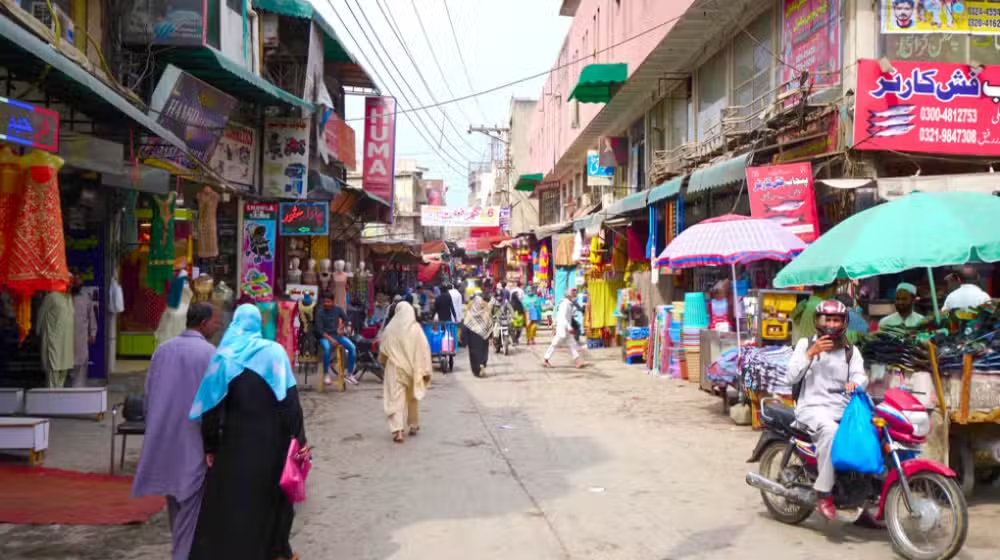
Pakistan has launched a major energy conservation drive following the historic fuel price hike of April 3, 2026 — when petrol surged to Rs.458.41 per litre and diesel hit Rs.520.35 per litre, the highest prices ever recorded in the country’s history. One of the central measures is the early closure of markets, shops, restaurants, and commercial establishments across Pakistan.
If you run a business, own a shop, or simply want to know when your local market will close, here is the complete, province-wise breakdown of the new market timings in Pakistan — updated as of April 6, 2026.
Why Are Markets Closing Early in Pakistan?
The US and Israel launched military operations against Iran on February 28, 2026, triggering a severe disruption to global oil supplies through the Strait of Hormuz. With Pakistan importing a large share of its fuel requirements, the resulting price spike forced the government to announce a sweeping austerity package.
Planning Minister Ahsan Iqbal explained the rationale clearly: much of Pakistan’s electricity is generated from imported furnace oil, making nighttime electricity consumption extremely costly. He noted that electricity used at night currently costs between Rs.60–80 per unit due to furnace oil dependence. Early market closures are projected to save up to 1,200MW of peak electricity demand nationwide.
The government also pointed to international practice — markets in Japan, the United States, Malaysia, Indonesia, and Turkey typically close by 6pm–8pm — as justification for the policy shift.
Province-wise New Market Closing Timings (April 2026)
- Divisional HQs: Markets close 9pm
- Other Districts: Markets close 8pm
- Restaurants / Cafes: Close 10pm
- Wedding Halls / Events: End by 10pm
- Private offices, banks, gyms: Close with market timings
- Home delivery / takeaway: Allowed after 10pm
- All markets / shopping centres: Close 8pm
- Restaurants / Hotels: Close 10pm
- Wedding Halls / Events: End by 10pm
- Decorative lighting / LED screens: Banned after hours
- Air conditioning / generators: Restricted after business hours
- Federal government consulting Punjab on timings
- Planning minister instructed provincial authorities to issue revised notifications within 24 hours
- Expected to align with national 8pm framework
- Sindh CM announced province-wide fare freeze (at Feb 28 levels)
- Rs.4 billion subsidy for 11,000+ buses
- Market closure timings under consultation with traders
- Total subsidy commitment: Rs.14 billion
Complete Summary Table — New Market Timings Pakistan April 2026
| Province | Markets / Shops | Restaurants / Cafes | Wedding Halls / Events | Status |
|---|---|---|---|---|
| KP — Divisional HQs | 9:00 PM | 10:00 PM | 10:00 PM | ✅ Active |
| KP — Other Districts | 8:00 PM | 10:00 PM | 10:00 PM | ✅ Active |
| Balochistan | 8:00 PM | 10:00 PM | 10:00 PM | ✅ Active |
| Punjab | TBC (est. 8pm) | TBC | TBC | ⏳ Pending |
| Sindh | TBC | TBC | TBC | ⏳ Pending |
Who Is Exempt from the Early Closure Order?
✅ Businesses Exempt from Early Market Closure
- Pharmacies and medical stores (open 24 hours — medicines only)
- Hospitals, laboratories, and emergency health services
- Tandoors, nanbais (bakeries)
- Petrol pumps and fuel stations
- Agricultural activities and construction sites
- Home delivery and food takeaway services (after restaurant close)
- Industrial production facilities
What Other Energy Saving Measures Has the Government Announced?
The early market closures are part of a wider austerity package. Other measures in place include:
- A four-day working week for federal government employees
- 20% cut in departmental expenditures across government offices
- Reduced fuel allowances for government officials
- Ban on decorative lighting, LED billboards, and flood lighting after business hours
- Restrictions on air conditioners, lifts, escalators, and generators for non-essential commercial use
- All electrical appliances in government offices to be switched off when not in use
How Are Traders Reacting?
The response from Pakistan’s business community has been largely negative. The Central Anjuman-i-Tajiran Balochistan described the government’s timings as “anti-trader” and warned of protests if the orders are enforced. Their president Abdul Rahim Kakar demanded markets remain open until 10pm and wedding halls until midnight.
Traders pointed out that Balochistan’s economy is heavily trade-dependent with few large industries, and that businesses are already under severe strain from record inflation, unemployment, border trade restrictions, and the fuel crisis itself. They compared the restrictions to COVID-19 lockdown measures.
The Planning Minister responded by urging traders to cooperate “with empathy,” stating that these measures are temporary and that the public would eventually adjust.
Frequently Asked Questions
Bottom Line
Pakistan’s early market closure policy is one of the most direct measures the government has taken in response to the 2026 fuel crisis. KP and Balochistan are already enforcing the new timings from April 6, while Punjab and Sindh are finalising their own notifications. We will update this article as more provinces confirm their timings — bookmark this page and check back for the latest updates.


